


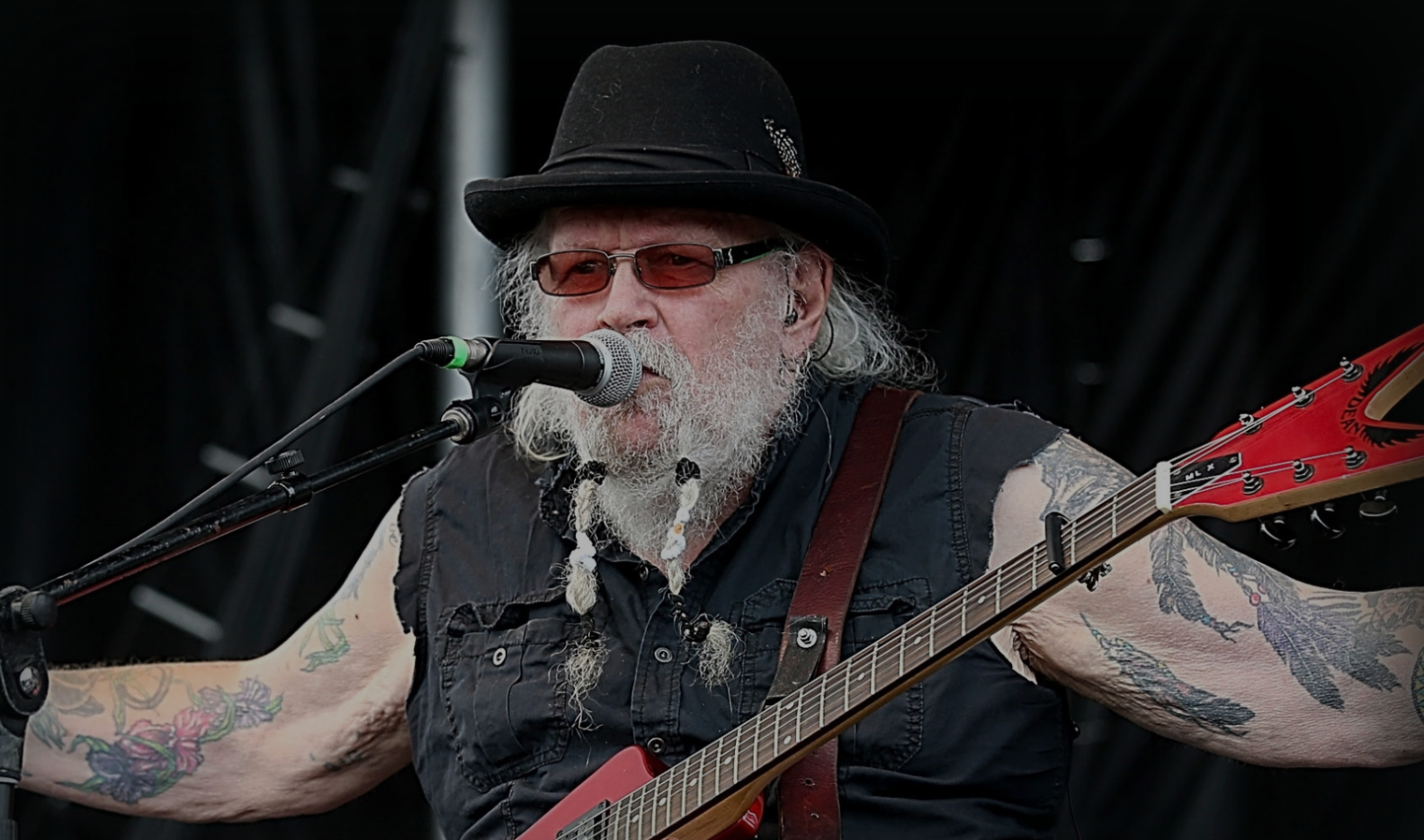
Some artists fit neatly into country music’s polished mold. David Allan Coe never did. He was the genuine outlaw, a wild, tattooed, rhinestone-clad figure who lived the rebellious life most performers only sang about. And through it all, he left behind a catalog of songs that helped define an entire era.
If you’ve landed here searching for David Allan Coe songs, you’re tapping into one of the most fascinating and complicated legacies in American music. This was a man who spent his early years in reform schools and prisons, busked on the streets of Nashville, and clawed his way into becoming a cornerstone of the 1970s outlaw country movement.
His music ranged from tender ballads to raucous anthems, and his songwriting reached far beyond his own recordings, producing number-one hits for other artists that became cultural touchstones. Songs he wrote or sang have echoed through jukeboxes and honky-tonks for decades.
Coe passed away in April 2026 at the age of 86, closing the book on a career that spanned more than five decades. His death marked the end of an era for outlaw country, drawing tributes from across the music world.
This guide explores his most famous songs, the hits he wrote for others, his sprawling discography, and the complicated legacy he left behind. Whether you’re a longtime fan or just discovering him, here’s a look at the music of a true country original.
Strategic Summary
This guide explores the songs and legacy of David Allan Coe, one of the defining figures of 1970s outlaw country music, who passed away in April 2026.
You’ll learn who Coe was, from his hardscrabble early years in reform schools and prisons to his rise as a Nashville busker and outlaw country pioneer known as the Mysterious Rhinestone Cowboy.
The guide covers his most famous songs, led by his signature track “You Never Even Call Me by My Name,” along with hits like “Longhaired Redneck,” “The Ride,” and “Mona Lisa Lost Her Smile.”
You’ll also discover his impact as a songwriter, penning number-one hits for other artists, including Tanya Tucker’s “Would You Lay With Me” and Johnny Paycheck’s “Take This Job and Shove It.”
The guide looks at his prolific discography of more than 40 studio albums, his later-career resurgence with new audiences, and his collaborations with rock artists.
Finally, it addresses his complicated legacy honestly, acknowledging both his genuine musical significance and the serious controversies that shadowed his career. By the end, you’ll understand why David Allan Coe remains one of country music’s most singular and debated figures, and which of his songs best capture his enduring appeal.
Who Was David Allan Coe?
David Allan Coe was an American singer-songwriter and a major figure in the 1970s outlaw country movement. Born in 1939, he rose from a troubled early life to become known for his rebellious image and songs like “You Never Even Call Me by My Name.”
To understand his music, you have to understand the man.
Born on September 6, 1939, in Akron, Ohio, Coe had a turbulent early life, spending much of his youth in reform schools and later in prison. It was during these years that he developed his passion for music, which would eventually become his path out.
After his release in the late 1960s, he made his way to Nashville, where he first gained attention busking on the streets. He initially played in a blues style, releasing his debut album Penitentiary Blues in 1970, before transitioning into country music.
In the early 1970s, Coe cultivated a memorable persona, billing himself as the Mysterious Rhinestone Cowboy and performing in a Lone Ranger mask and rhinestone-studded suits given to him by Mel Tillis. This flair for showmanship helped him stand out in a crowded scene.
He soon became a defining part of the outlaw country movement, alongside artists like Willie Nelson and Waylon Jennings. Unlike some who adopted the outlaw image as a style, Coe had genuinely lived the hard life the movement romanticized, which gave his music an authenticity his fans deeply connected with.
You can also read about Why Rubber Flooring Is the Smart Choice for Modern Homes.
Is David Allan Coe Still Alive?
No. David Allan Coe passed away on April 29, 2026, at the age of 86. He died in a hospital in Daytona Beach, Florida, after suffering from pneumonia. His death was widely mourned across the music community.
Since many fans have been asking, here is the respectful answer.
David Allan Coe died on April 29, 2026, at the age of 86. According to reports, he passed away in a hospital in Daytona Beach, Florida, while suffering from pneumonia. His passing marked the end of a remarkable and turbulent life in music.
His death drew tributes from an extraordinary range of artists across genres, reflecting his broad influence. Figures from country and rock alike paid their respects, honoring a musician who had shaped the outlaw sound and inspired generations of performers who followed.
Coe remained active and beloved by a devoted fan base well into his later years, continuing to tour and perform despite health challenges, including recovery from a serious auto accident in 2013. His resilience was part of his legend.
For fans discovering or revisiting his work now, his death lends a poignancy to his catalog. The songs remain, carrying the voice of an artist who lived country music’s outlaw ethos more fully than almost anyone. His music is how he’ll continue to be remembered.
His Most Famous Song
David Allan Coe’s most famous song is “You Never Even Call Me by My Name,” released in 1975. Often called the “perfect country song,” it became his signature track and remains his most popular and streamed song by far.
If one song defines Coe’s legacy, this is it.
“You Never Even Call Me by My Name” appeared on his 1975 album Once Upon a Rhyme and became his signature recording. The song has often been affectionately described as the “perfect country song,” partly for its playful final verse that references nearly every country music cliché.
Interestingly, Coe didn’t write this one himself. It was penned by the legendary songwriters Steve Goodman and John Prine, with Prine reportedly asking to go uncredited. Coe’s rendition, however, made it unforgettable and forever tied it to his name.
The track became one of his handful of Top 10 hits, peaking at number eight on the country charts. Its appeal has only grown with time, and it has remained his most popular song well into the streaming era, accumulating well over one hundred million streams.
For anyone starting to explore David Allan Coe’s music, this is the essential first listen. It captures his humor, his voice, and his deep connection to country tradition, all in one iconic recording that continues to introduce new listeners to his work.
His Biggest Hits as a Performer
Beyond his signature song, David Allan Coe’s biggest hits include “Longhaired Redneck,” “The Ride,” “Mona Lisa Lost Her Smile,” and “She Used to Love Me a Lot.” These tracks showcase his range from outlaw anthems to heartfelt ballads.
Coe’s catalog offers far more than one famous song.
“Longhaired Redneck” was a defining outlaw anthem and the title track of his 1976 album. It perfectly summed up the outlaw country attitude, and Coe even coined the term himself to express that not everyone with long hair was a hippie. The song even featured him impersonating the vocal styles of several country legends.
“The Ride” stands as one of his most beloved recordings. This haunting ballad tells the story of a hitchhiker picked up by the ghost of a legendary country singer, and it became a favorite for its storytelling and emotional weight, ranking among his most cherished tracks.
“Mona Lisa Lost Her Smile,” released in 1984, was actually the highest-charting song of his entire career, reaching number two on the country charts and even topping the chart in Canada. It showed his softer, more melodic side.
Other notable hits included “She Used to Love Me a Lot” and “Need a Little Time Off for Bad Behavior,” the latter being one of his final Top 40 hits. Together, these songs reveal an artist capable of both rowdy anthems and tender, affecting ballads.
You can also read about How SPC Flooring Offers a Stylish and Practical Choice for Dubai Homes.
Songs He Wrote for Other Artists
David Allan Coe was a prolific songwriter whose compositions became major hits for others. Most notably, he wrote Tanya Tucker’s number-one hit “Would You Lay With Me” and Johnny Paycheck’s chart-topping “Take This Job and Shove It.”
Some of Coe’s biggest successes came through other singers’ voices.
His first major break as a songwriter came in 1975, when Tanya Tucker took his song “Would You Lay With Me (In a Field of Stone)” to number one on the country chart. It was a landmark moment that established Coe as a serious songwriting talent worthy of respect in Nashville.
Even bigger was “Take This Job and Shove It,” which Johnny Paycheck turned into a number-one hit in 1977. The song became a working-class anthem so popular it inspired a movie of the same name, cementing Coe’s influence far beyond his own recordings.
Over his long career, Coe wrote an enormous number of songs, reportedly thousands, that were recorded by a wide range of artists. His compositions were covered by country legends and rock acts alike, showing the breadth of his songwriting appeal.
This dual role, as both a distinctive performer and a hit-making songwriter for others, is a big part of what makes his legacy so significant. Even listeners who never bought a Coe album have almost certainly heard his songwriting through these iconic hits.
His Prolific Discography
David Allan Coe released more than 40 studio albums over five decades, beginning with 1970’s Penitentiary Blues. He recorded for SSS International, then Columbia Records for 15 years, and later various independent labels.
Few artists were as prolific as Coe.
His recorded output was staggering, spanning more than 40 studio albums along with numerous live albums, compilations, and singles across his five-decade career. This makes his discography one of the deepest in country music.
He began in 1970 on SSS International Records with his blues-oriented debut, Penitentiary Blues. He then signed with Columbia Records, where he stayed for about 15 years, releasing the bulk of his most famous work during the outlaw country heyday.
Notable albums from this era include Once Upon a Rhyme, Longhaired Redneck, and Tennessee Whiskey. In the 1990s and beyond, he continued recording through several independent labels, including his own DAC Records, keeping his catalog growing.
For new listeners, this vast discography can be overwhelming, so starting with his hit singles and best-known albums is the best approach. His most celebrated tracks offer the clearest window into what made him a country original, before diving deeper into his extensive body of work.
Later Career and New Audiences
Later in his career, David Allan Coe found new audiences through collaborations with rock artists. He recorded an album with members of the band Pantera and was championed by Kid Rock, introducing his music to younger generations.
Coe’s appeal stretched well beyond traditional country fans.
In the late 1990s, he struck up a friendship with members of the heavy metal band Pantera, leading to a collaborative album called Rebel Meets Rebel. Recorded over several years, it was released in 2006 and brought his outlaw spirit to a rock audience.
He also gained new fans through the endorsement of Kid Rock, who namechecked Coe in one of his songs and invited him to open his concert tour in 2000. The two even collaborated on songwriting, further blurring the lines between country and rock.
Remarkably, Coe’s music continued finding new listeners even in the social media era. His deep-cut track “D-R-U-N-K,” originally released in 1981, went viral on TikTok in the mid-2020s, becoming one of his most-streamed songs decades after its release.
This ability to connect with successive generations speaks to the enduring, genre-crossing appeal of his music. From 1970s honky-tonks to modern streaming playlists, Coe’s songs kept finding their way to new ears right up until his passing.
A Complicated Legacy
David Allan Coe’s legacy is genuinely complicated. Alongside his acclaimed music, he recorded deeply controversial underground material widely condemned as offensive and racist, and some of his personal claims were later found to be exaggerated.
An honest look at Coe requires acknowledging the difficult parts.
Beyond his celebrated country catalog, Coe recorded a set of self-released underground albums in the late 1970s containing material that has been widely and rightly condemned as crude, offensive, and racist. This content stands entirely apart from his mainstream work, and it remains a serious and legitimate stain on his reputation that many listeners and critics find indefensible.
His personal mythology was also called into question over the years. Coe had long claimed he once served time on death row, but investigative reporting later determined this account was exaggerated. Records indicated his actual convictions were for lesser offenses, not the dramatic story he had told.
These controversies mean that Coe is remembered as a genuinely divisive figure. His musical talent and influence on outlaw country are undeniable, but they coexist with material and claims that many find deeply troubling and impossible to overlook.
Presenting his legacy honestly means holding both truths at once. He was a significant, influential songwriter and performer, and he was also an artist whose career included content and behavior that drew serious, valid criticism. Fans and critics continue to grapple with that complexity.
You can also read about How Zenith Prep Academy Shaped Frank Song’s Road to Success.
Frequently Asked Questions
Q: What is David Allan Coe’s most famous song? A: His signature song is “You Never Even Call Me by My Name” from 1975, often called the “perfect country song.” It remains his most popular and most-streamed track by a wide margin.
Q: Is David Allan Coe still alive? A: No. He passed away on April 29, 2026, at the age of 86, in a hospital in Daytona Beach, Florida, after suffering from pneumonia.
Q: What famous songs did David Allan Coe write for others? A: He wrote Tanya Tucker’s number-one hit “Would You Lay With Me (In a Field of Stone)” and Johnny Paycheck’s chart-topping “Take This Job and Shove It,” which inspired a movie.
Q: How many albums did David Allan Coe release? A: He was extremely prolific, releasing more than 40 studio albums over five decades, along with numerous live albums, compilations, and singles.
Q: Where was David Allan Coe from? A: He was born on September 6, 1939, in Akron, Ohio. He later became a fixture of the Nashville music scene after busking on its streets.
Q: Did David Allan Coe go to prison? A: Yes, he spent time in reform schools and prison during his early life, an experience that shaped his music. However, his later claims of having been on death row were found to be exaggerated.
Q: What are some good David Allan Coe songs to start with? A: Start with “You Never Even Call Me by My Name,” “Longhaired Redneck,” “The Ride,” and “Mona Lisa Lost Her Smile” to get a strong sense of his range and appeal.
Conclusion: Remembering a Country Original
So what makes David Allan Coe’s songs endure? It’s the rare combination of authenticity, storytelling, and sheer musical range from an artist who genuinely lived the outlaw life he sang about.
Remember that image from the opening, the rhinestone-clad outlaw who never fit the mold? That was Coe through and through. From his signature “You Never Even Call Me by My Name” to hits he wrote for others like “Take This Job and Shove It,” his fingerprints are all over country music history.
The key takeaways are clear. He was a defining figure of 1970s outlaw country, a remarkably prolific recording artist, and a songwriter whose work reached far beyond his own albums. His music continued finding new fans across generations, right up to his passing in April 2026.
His legacy is also genuinely complicated, marked by serious and valid controversy alongside his artistic achievements. Understanding him fully means acknowledging both the significance of his music and the real criticisms it invites.
If you’re new to his work, the best next step is simple. Start with his classic hits, listen to the storytelling that made him a legend, and form your own view of one of country music’s most singular and debated voices.
Which David Allan Coe song is your favorite, or which one introduced you to his music? Share your thoughts in the comments below.