


When a new pope steps onto the balcony above St. Peter’s Square, all international time. But few people think about where the guy was formed, the classrooms and libraries that shaped his ideas years before we all imagined he could lead a church.
For Pope Leo XIV, who was elected in 2025, became one of those places for the University of Rome that you had never heard of. It is known as the Pontifical University of St. Thomas Aquinas, although almost everyone knows it by means of a shorter, extra smart petition: Angelicum .
Here is what the first class does. This unmarried college helped form the last 4 popes, along with famous preachers and theologians. That’s a great song report for a school within the Eternal City.
However, Angelicum is often misunderstood. People consider it a mystical seminary closed to ordinary students, or they confuse it with various Roman institutions. The fact is, it’s a lot extra exciting and free than most people would expect.
I will walk you through what this university really is, its centuries-old records, what university students find there, and its deep connection to the papacy. You can also research who might be involved. Let’s step into one of the most fascinating faculties in Rome.
Summary
With one break from this guide, you will understand the Pontifical College of St. Thomas Aquinas and why it matters.
First, research what a university is, who sits in it, and who runs it. His introduction explains everything else.
Then you learn about his amazing records, which reach back to the lower thirteenth century and to St. Thomas Aquinas himself.
You’ll also learn about his pioneering schools and what college students actually see, from dogmatic theology to canon regulation.
You’ll learn why it includes the nickname “The Angelicum” and what his Dominican, Thomistic character’s approach to the practice is.
Next comes the most famous characteristic: the connection to the papacy. You see, it helped shape Pope Leo XIV and various church leaders.
Then you’re going to explore something that surprises a lot of people, especially those who can honestly look into it. Finally, you may fear that it has lasting effects. In the end, this historic university will feel much less mysterious and a way extra fascinating.
You can also read about APUSH Score Calculator.
What Is the Pontifical University of Saint Thomas Aquinas?
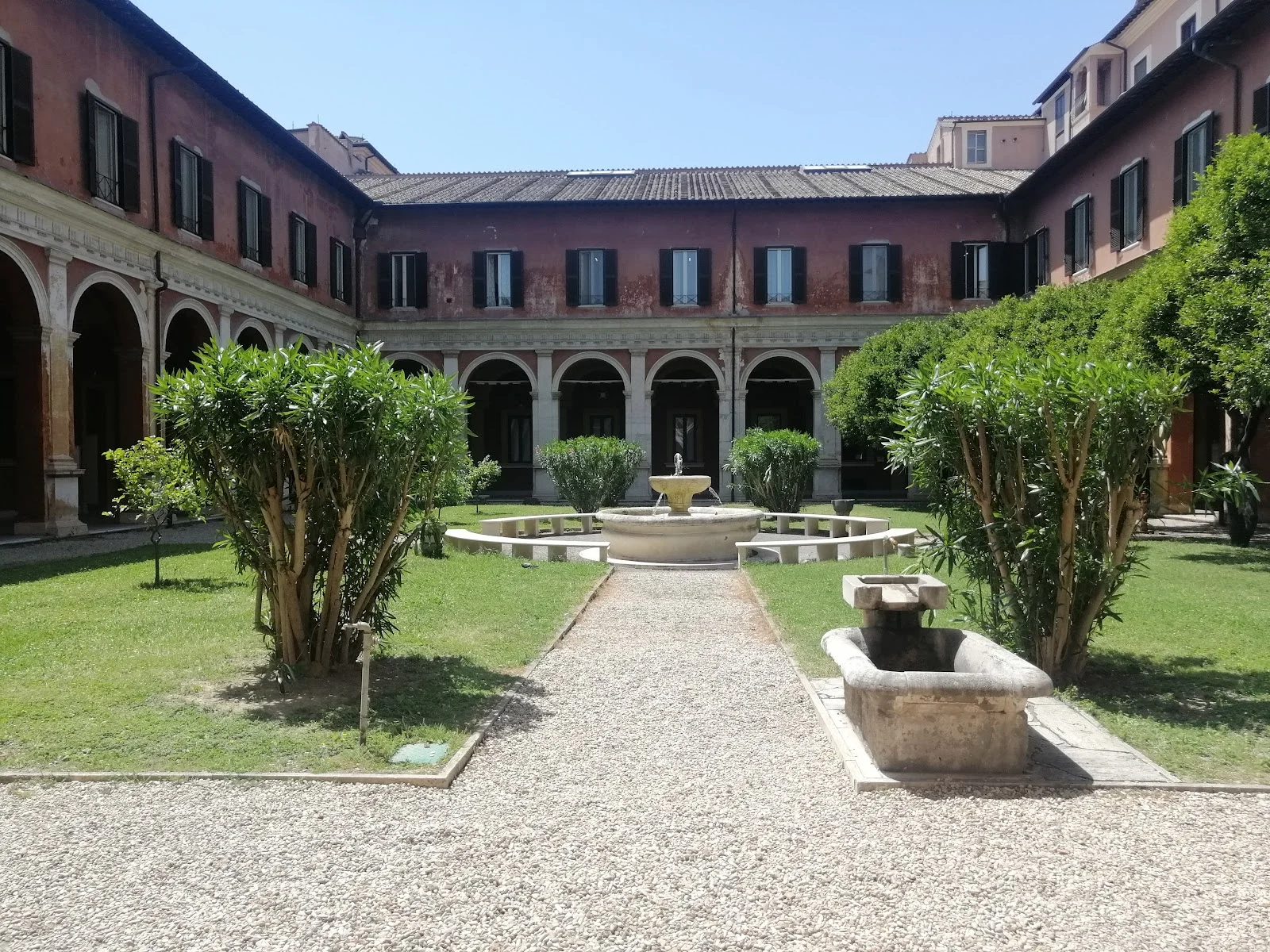
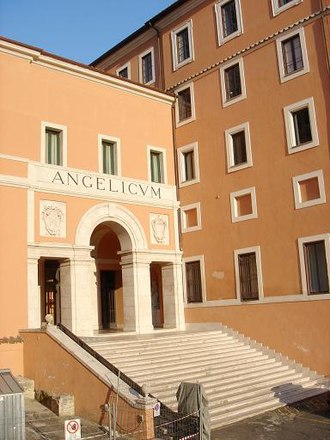
Start with the basics. The Pontifical University of St. Thomas Aquinas, which in Italian is counted as San Tommaso de Aquino, is a Catholic university located within the historic center of Rome Most people call it Angelicum, and you will see that name used everywhere.
The college is administered using the Dominican Order, officially called the Propagating Order, a well-known Catholic religious order based on St. Dominic, well known for his knowledge of awakening and preaching Angelicum is the flagship college of the Dominicans as scholarly and modest of all St. Thomas. of the most important theologians and philosophers .
The papacy means that the decisive authorities of the Catholic Church are formally established through the Holy See. Its ranks therefore give it a special position within the church, and it operates under the authority of the church in relation to the government of the whole country.
In undeniable terms, he himself is the center of Catholic reading, deeply rooted in a select highbrow tradition. His motto, “the gift of truth,” captures his entire motivation: the pursuit of truth as an act of love. But to really appreciate it, you need to know how a road behind the story goes.
A History Rooted in Aquinas Himself
Angelicum’s albums are honestly wonderful, stretching at the bottom of the page for something like 800 years. This is not a modern establishment with a sleek appeal. The roots go back to the origins of Dominican education.
The story begins in thirteenth-century Rome, in a Dominican residence attached to the Basilica of Santa Sabina. And here’s the incredible part. In the Dominican department, St. Thomas Aquinas himself taught trained monks preparing for the priesthood. The university therefore traces its intellectual bloodline directly to the finest thinker after whom it is named. Fellow Dominican St. Albert the Great, Aquinas’ personal teacher, belongs to this same way of life by initiation.
The group grew over the centuries and changed its name several times, from the early Collegium Divi Thome to the Collegio Angelico. It has evolved into the flagship university of the Dominican Order, steadily expanding its campuses and reputation as a center of Catholic thought in the heart of Rome .
The very last major milestone came in 1963, when the college officially became famous. It is the modern system as we understand it today. So while it officially became a “college,” its educational tradition is one of the oldest continuous threads of a Catholic school. That long legacy now shapes what students observe.
The Faculties and What You Study
Angelicum organizes its program into 4 main departments, each covering a major area of Catholic studies. Understanding them will give you a good indication of what the college is all about.
The Department of Theology is the heart of the institution, preserving areas such as dogmatic theology and biblical exegesis, a careful look at Scripture. Alongside him, the philosophy department studies deep questions about reality, understanding and human nature, with a strong emphasis on the development of Thomas Aquinas.
The Department of Canon Law is especially good because it trains university students in the Church’s own legal system, which governs everything from marriage to episcopal pilgrimages This is the same field that the current Pope studied there. The fourth is the Institute of Social Sciences, which applies the Catholic concept to society, politics, and human affairs.
Beyond them, the college has separate institutions. The Mater Ecclesia, the higher institution of religious studies, serves secular students and secular scholars, while the Thomistic Institute and the John Paul II Institute for Culture enhance specialized scholarship. As a plausible example, a scholar would probably be there this year, as soon as the Destiny Pope. All of this ties back to 1 mentor subculture.
Why It’s Called the Angelicum
You wonder where the catchy nickname “the Angelicum” comes from. The solution reveals the whole highbrow spirit of the university, so this mile is really worth noting.
St. Thomas Aquinas earned the recognition of the “Angel Doctor” for the study and depth of his education. The Latin word for angelic gives us “angelicum,” a tribute to the user whose term defines the college. So the nickname is honestly a nod to the man who is in the middle of the whole, which the school is. His best works, like Summa Theology and Summa against Pagans , remain mediocre works there.
That term also has an evocation of Thomism, that is, a philosophical and theological tool built on the ideas of Aquinas. Angelicum is widely regarded as the world’s leading center of analysis of the Thomistic way of life, and the Dominican Congregation has promoted this teaching for centuries. They are baptized in his wonderful way.
This gives the university a fantastic character. Here’s my honest take: Angelicum’s real value is not in keeping up with global university rankings, but in maintaining a living, breathing intellectual culture. Anything about a field committed to immortal questions can be effective in an international arena with constantly changing trends. That devotion has produced some amazing graduates.
The Pope Connection: Forming Church Leaders
It was this episode that currently put Angelicum in headlines around the arena. It is a magnificent document for creating leaders at the very top of the Catholic Church on campus.
The most extensive Pope Leo XIV studied there. Before becoming pope, when he became known as Father Robert Prevost, he received a license and then a doctorate in canon regulation on Angelicum throughout the 18th century and his time there shaped his knowledge of ecclesiastical law, which many observers agree began to influence how he led.
He is not alone. Pope John Paul II, one of the most beloved popes in modern affairs, received his doctorate in theology at Angelicum many years ago. That approach of the last four Popes was forged at this one university that calls its very college an untold honor. Even earlier, Popes Pius XI and Pope Paul VI, born Giovanni Battista Montini, contacted Dominicans to gain this kind of knowledge.
The list of outstanding graduates goes on, including the famous TV preacher Archbishop Fulton Sheen, the martyrs Friars and Giuseppe Girotti, and distinguished theologians who created the current Catholic term. It has helped shape the intellectual framework that guides the universal church. Which obviously raises a question that many people ask.
Can Anyone Study There? Who It’s For
Here is something that surprises a few people, and most reports never make it clear. Angelicum is not the most effective reserved closed seminary for prospective pastors. It’s a little bit more open than that.
The university is co-educational, which means it accepts both men and women. Disciples now include not only priests and participants in religious orders, but additionally secular college students, lay Catholics, and others seeking serious schooling in theology, philosophy, religious studies, or canon law. So you don’t have to be a priest or a nun to visit its premises.
It is equally surprising internationally. Angelicum attracts close to 1000 students from 100 different nations, creates a definite international network in the center of Rome offers many courses in Italian to make it sensible, but also a growing amount of degrees in English echo biblical studies
So obviously who is it for? Anyone interested in deep Catholic scholarship, whether they pursue an ecclesiastical career or truly love these things. Looking ahead, there is now a sitting Pope among the alumni, interest within Angelicum could develop, and the English offerings could also grow to meet the call with more at hand than its high reputation suggests.
You can also read about Mashable Connections Hint Today.
Conclusion
The Pontifical Academy of St. Thomas Aquinas is no longer a secret. You know it now because Angelicum, a historic Roman college whose roots go all the way back to St. Thomas Aquinas himself.
Note the important object factors. It is administered using the Dominican Order and serves as the principal mediator in the state for Aquinas’s vision. It offers schools ranging from theology to canon law and offers denominationally identified degrees. Most famously, it helped form Pope Leo XIV and Pope John Paul II, and welcomes students from all kinds of universities around the world.
Above all, remember what makes it special. It is a place where the historic intellectual lifestyle still lives on, quietly shaping the mind that goes on to haunt the entire Catholic Church.
Here you have an obvious next step. If this college has piqued your curiosity, check out its reputable website to explore the complex, its history, and the legends of the popes who helped shape it. You will also find that one of the most influential faculties in Rome is certainly also one of the most welcoming.
So tell me, what draws you to the Angelicum maximum, its outrageous association with the Papacy or its 800-year-old hyperlink to St. Thomas Aquinas himself?