


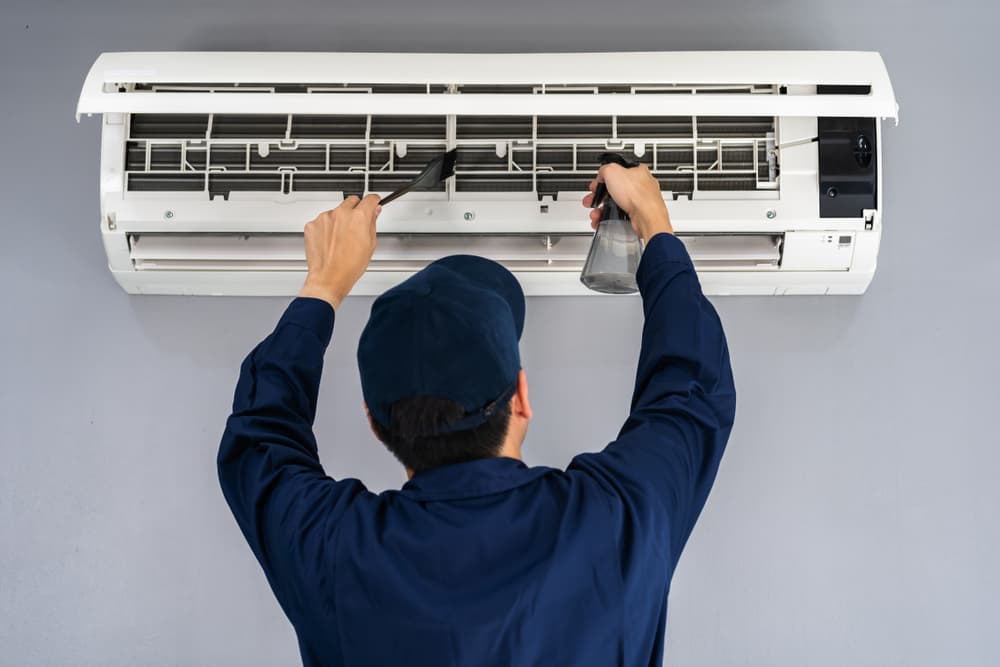
Air Conditioner Repair Last July, Maria woke up to a pool of water near the walk-in closet. She thought a pipe had burst. It wasn’t. The condensate drain in her air handler was clogged and the water had nowhere else to go. She referred three treatment companies before one responded directly to her. The first one quoted $900 for a new unit. The 2d is never known by name at the bottom of the page. 0.33 The technician spent ten minutes cleaning the drain line and charged her one hundred and forty dollars. Mary’s story is not a rare one. Most humans panic when the air conditioner stops working, and they didn’t need to spend money because of the panic. This is a manual that is not a one-off for you.
What You Will Learn And Why It Matters
By the break of this lesson, you’ll understand exactly how your air defense system works, what really breaks the internals, and how to spot a real emergency from a five-minute fix. You will analyze which words mean coincidence and which of them mean nothing at all. You’ll see real numbers from actual recovery sites, no longer fuzzy estimates. You can also check which appliances the property owner can use safely and which operations require an authorized HVAC technician.
Most online articles both oversimplify air conditioning restoration or drown you in technical jargon you can’t use. This one does neither. Each step is explained in the moment it seems. Each level adds something that the rest didn’t. You will walk away knowing your refrigerator about as well as studying most humans for ten years of having one, and knowing exactly what to do the next time something goes wrong
You can also read about Two Men and a Truck.
How Your Air Conditioning System Actually Works
Think of your expensive air conditioner as a sponge that absorbs heat rather than water. Hot air from your property moves over an evaporator coil attached to steel tubing filled with refrigerant, which absorbs heat as the chemical changes from liquid to gasoline That heat goes out into a condensing chamber, where a fan blows across the condensers, and releases the heat into the outlet.
This whole loop depends on three things working together: the compressor, the fan motor, and the level of refrigerant. If any of them fail, your inner comfort will quickly disappear. Most ACs are built to run this cycle nonstop throughout the healthiest months, which is why normal stress causes wear and tear over the years
Here is something that Maximum Accounts pass on. Your air conditioner does not produce anaerobic gas. It removes heat and moisture from the house. The unmarried truth explains almost every AC problem you could ever encounter, due to the fact that a struggling device is really a device that can no longer conduct heat fast enough.
The Most Common Reasons Your AC Stops Cooling
A dirty air filter is the number one cause of your AC failing outdoors, and it’s also the easiest to fix. When the clear out becomes clogged with dust, the airflow drops, the evaporator coil becomes too cold, and it freezes. A frozen coil cannot absorb heat, so your property will stay warm no matter how long the unit is run. Changing every clear out prevents most of this for a few months.
Refrigerant leaks are the second biggest culprit. Unlike car gas, refrigerant is not always something your system uses up. If your grades are low, there may be a leak somewhere in the lines or coils, and not fixing the leak is like pouring water into a cracked bucket to really add more coolant in. Have a qualified technician detect and seal the leak first.
Faulty electrical connections cause the accidental, careless breakdowns that scare owners the most. Capacitors wear out, wires come loose, and fan drives burn out from age and heat. If your outdoor unit is humming and the fan blades are no longer spinning, this is usually a static electrical problem, now not a coolant problem. This is exactly what a voltage detector is important in, because electrical work involves real risks, and should in no way be dealt with a
Sounds And Signs That Actually Mean Something
Severe grinding often comes close to the fan motor bearing failing or the fan blade hitting something it shouldn’t. It doesn’t work out even now, and if you routinely ignore it, $200 turns into a $600 renewal weeks later. A hissing sound near the lines is often a factor in refrigerant leaks, as is a clicking sound when starting or stopping the unit is usually normal and just turns on the relay
Water draining from your indoor unit is almost always a blocked condensation drain, as happened with Mary. This line can become clogged with algae and dust over time, especially in humid climates. This sounds daunting, however, it is by far one of the cheapest and quickest maintenance that HVSC can provide.
Fun fact: Even clogged drain line problems are one of the most common service calls in wet areas, but it takes under fifteen minutes to repair when most technicians arrive
DIY Fixes Versus When You Absolutely Need A Professional
You can properly shop in your air filter, clean up debris around your outdoor condensing unit, and fix bent fan blades using a butter knife or spring comb You can also check that your thermostat settings are correct and the batteries aren’t draining, resolving “broken AC” calls more people than anticipate.
Never touch traces of refrigerant, open electrical panels, or attempt to lift heavy condensing units outside. These jobs require certified HVAC contractors because mistakes here can cause damage or make the loss a little far worse. A convenient rule of thumb that you should not forget is that if the repair involves power, refrigerant, or moving heavy systems, you should call an expert.
Real Numbers From Real Repair Situations
A homeowner in the Midwest metropolitan area near Union, MO reported a nearby HVAC failure. The forecast took twenty minutes and found a failing capacitor, a small electrical factor that allows the fan motor and compressor to start. That element cost $45, labor cost $120, and her system cooled once again within the hour. Total payment: $165, as opposed to the $4,000 she feared she wanted.
In a separate case, a concerned group in Los Angeles did not notice a slow coolant leak for 2 full summers. Their high-priced refrigeration bill increased nearly forty percent because the struggling compressor was working overtime to compensate and when they called a technician, the compressor failed completely, bringing the repair bill to $1,800. Catching that leak over 12 months would cost about $250 a piece.
A 0.33 case considered a ductless mini-cut up gadget in an apartment without mandatory ductwork. The air handler on the unit had a dirty compartment that had not been cleaned in any way for three years. A standard track-up restored full cooling capacity, improved electrical performance through an estimated 15 percent, based entirely on technician before-and-after performance tests
Tools That Actually Help, With Honest Pros And Cons
The Primary Voltage Detector costs about $15 and allows you to efficiently check if an object is left behind before you touch it. Upstairs is the real defense. The downside is that it just tells you that energy is a gift, not what’s wrong.
A spring comb fixes tight coils at night and costs less than $10. It works nicely for mild damage however cannot fix earlobes that can get lost or rubbed.
Virtual Multimeter allows you to diagnose electrical connections and motor problems. It’s powerful, but has a learning curve for anyone without the joy of electricity.
Smart thermostats, typically $100 to $250, improve power efficiency and allow you to monitor appliance reliability remotely. The downside is that they do nothing to restore the mechanical or coolant malfunction.
Professional refrigerant meters are accurate and essential for real-world diagnosis, but they require EPA certification to purchase and use legally in many areas, so this tool is for technicians, not homeowners.
You can also read about Why Rubber Flooring Is the Smart Choice
The Opinion Most Homeowners Will Disagree With
Here’s an ambitious take. Annual maintenance visits are not an optional luxury, they save they are cheap compared to cars, and skipping them is one of the high-priced monetary options without a homeowner realizing it. Most people treat AC maintenance like they would a dental checkup, something to pass on when cash feels tight. But a $120 routine sing-up that catches a small coolant leak or worn fan motor early can prevent a $1,500 emergency repair at some stage in the worst heat of summer, while a 24-hour AC repair quote often costs top-notch prices to avoid warning lights like Quickie lighting. It delays the simplest and multiplies the price.
What Happens If You Ignore Your AC Problems
Ignoring the small AC problem never ever lasts in a small way. A dirty air filter is a frozen coil. A small refrigerant leak is a burned-out compressor. An unmarried unbonded electrical connection can then damage your entire HVAC system, turning a one hundred and fifty repair into a complete alternative that costs thousands. Beyond cash, struggling appliances additionally give indoor air a good deterioration because a clogged appliance pushes dust, allergens, and excess moisture around instead of filtering them out.
Similarly, the bigger picture is not what most people have in mind. Failures in AC units in dense urban settlements exacerbate the heat island effect, where concrete and asphalt trap heat and push societal temperatures higher Multiply an inefficient unit with housing debris, and the environmental footprint becomes huge. Fixing the system immediately isn’t just about your comfort, it also enables your environment.
The Simple Path Forward
By now, you know your air conditioner better than most homeowners. You know how the cooling cycle works, what generally breaks, what sounds count, and what maintenance you can handle yourself. You have visible real numbers that show the cost of minor repairs a little longer than frequently, and you have a clear opinion to guide your next choice: install before you restore, and repair before you replace.
The one next step that makes the most sense is that this. Next, book a repeatable song-up before the extravagant weather season hits, even if your system feels quality today. Will you tackle a thirty-minute inspection now hundreds later and keep your home in danger when you want it most.
So here’s a question that’s really worth sitting up for. If your air conditioner broke tonight, would you be able to tell the difference between a $1400 replacement and a $1400 failure?