



A woman at the dog park hands her Labrador a piece of watermelon, and three other owners immediately tense up. One pulls her own dog back. Another asks, half-worried, “Wait, is that safe for them?” A third mutters something about seeds being dangerous.
This little scene captures something real for owners wondering, can dogs have watermelon? Watermelon is one of the most misunderstood treats in the dog world. Half the owners asking can dogs have watermelon think it’s a wonderful summer snack. The other half are convinced it’s a hidden danger lurking on every picnic table.
So, can dogs have watermelon, and which group is right? Honestly, a bit of both, and that’s exactly the problem. The truth about can dogs have watermelon got buried under a pile of half-remembered warnings and outdated advice.
If you’ve searched can dogs have watermelon, you’ve probably heard the scary version. Seeds cause blockages. Rinds are toxic. Too much sugar is bad. And buried under those warnings is the part nobody emphasizes enough: prepared correctly, watermelon is genuinely one of the healthiest treats you can give a dog.
The frustrating reality is that most owners asking can dogs have watermelon either avoid it entirely out of fear or hand it over carelessly without knowing the actual risks. Neither approach serves your dog well.
This guide clears the fog. We’ll separate the real warnings from the overblown myths, explain exactly what’s safe and what isn’t, and give you a simple, confident way to share watermelon with your dog. By the end, you’ll be the calm, informed owner at the dog park, not the worried one.
Strategic Executive Summary
Yes, dogs can have watermelon, and the flesh is both safe and beneficial. The confusion comes from myths that exaggerate some risks while ignoring the real ones. This guide sorts fact from fiction.
You’ll get a myth-busting approach that other articles skip. We tackle the most common watermelon fears head-on and explain which are legitimate, which are overblown, and which are simply wrong. This framing helps you understand the why, not just the what.
If you’re wondering can dogs have watermelon, you’ll want to learn the genuine benefits. Watermelon delivers hydration, vitamins, and antioxidants while staying remarkably low in calories. For a summer treat, that combination is hard to beat, which is why veterinarians keep recommending it.
Anyone asking can dogs have watermelon should also understand the real risks, stated plainly. Seeds can cause problems in small dogs. The rind is hard to digest. Overfeeding upsets stomachs. None of these are reasons to avoid watermelon entirely, just reasons to prepare it properly.
Beyond the basics, we cover the questions owners actually ask. How much is too much? Can puppies and senior dogs have it? What about yellow watermelon or other melons? Each gets a direct, practical answer.
Most importantly, you’ll leave with confidence instead of anxiety. Watermelon isn’t a minefield. It’s a simple treat that becomes completely safe with thirty seconds of preparation. Once you know the facts, the fear disappears and you can focus on the part that matters: a happy, healthy dog enjoying a refreshing snack.
The Quick Answer Before We Bust the Myths
Yes, dogs can have watermelon safely. The red flesh is non-toxic, hydrating, and nutritious. Remove the seeds and rind, serve it in moderation, and it becomes one of the best summer treats available. That’s the entire rule.
Before diving into the myths surrounding can dogs have watermelon, let’s establish the foundation.Watermelon flesh is safe for dogs. It will not poison them. It’s actively recommended by veterinarians and appears on nearly every reputable list of dog-safe fruits.
The two parts that cause concern are the seeds and the rind. Neither is toxic, but both create physical risks that simple preparation eliminates. Remove them, and you remove the danger.
Everything else in this guide about can dogs have watermelon builds on that simple truth. Now let’s tackle the myths that keep owners up at night.
Myth 1: Watermelon Seeds Will Poison Your Dog
This is false. Watermelon seeds are not toxic or poisonous to dogs. The real concern is physical, not chemical. In small dogs, swallowed seeds can occasionally cause intestinal blockages, but they won’t poison any dog.
When discussing can dogs have watermelon, the poison myth is one of the most persistent misconceptions. People hear “seeds can be dangerous” and their brain jumps straight to toxicity. That’s not what’s happening.
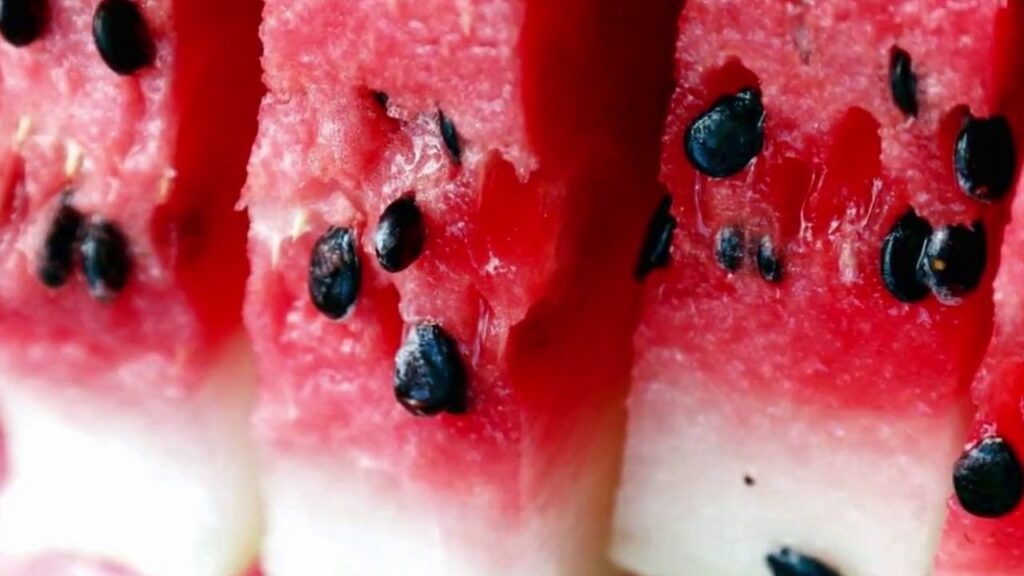
Watermelon seeds contain no toxic compounds that harm dogs. The actual risk is mechanical. Seeds don’t digest easily and pass through mostly intact. For a large dog, swallowing a handful usually causes no trouble at all.
Small dogs are where caution matters. In a tiny breed, multiple seeds can accumulate and create an intestinal blockage, which is a genuine medical issue. But this is about physical obstruction, not poisoning.
The fix is easy. Choose seedless watermelon, or pick out the hard black seeds before serving. The softer white immature seeds pose less risk, but removing all seeds is the safest habit. Do that, and the entire concern disappears.
Myth 2: The Rind Is Toxic and Deadly
Also false in the toxicity sense, but the rind genuinely isn’t safe to eat. It’s not poisonous, but it’s tough, hard to digest, and poses choking and blockage risks. So the warning is real, just for the wrong reason.
Here’s a myth with a kernel of truth wrapped in exaggeration. People say the rind is toxic. It isn’t. But that doesn’t mean you should let your dog eat it.
The problem with rind is purely physical. That hard green outer layer is fibrous and difficult for a dog’s digestive system to break down. Dogs who chew and swallow rind chunks frequently end up with stomach upset, vomiting, or diarrhea.
There’s also a real choking and blockage hazard, especially for dogs that gulp food without chewing. Large pieces of rind can lodge in the throat or cause obstructions similar to seeds.
So while “toxic” is the wrong word, “avoid it” is still correct advice. Cut the rind away completely and serve only the soft flesh. Never offer a rind as a chew toy, no matter how much your dog seems to want it.
Myth 3: Watermelon Is Just Empty Sugar Water
False. While watermelon does contain natural sugar, calling it empty is wrong. It’s loaded with vitamins, antioxidants, and hydration, all while staying very low in calories. It’s far more nutritious than its sweet taste suggests.
Many people asking can dogs have watermelon assume it offers nothing nutritionally because it tastes sweet and is mostly water. That sells this fruit short.
Start with the water. Watermelon is roughly 92 percent water, which makes it excellent for hydration on hot days. For dogs that don’t drink enough on their own, a few juicy pieces help keep them cool and hydrated.
Then there are the nutrients. Watermelon contains vitamin A for vision and skin health, vitamin B6 for metabolism and brain function, and vitamin C as an immune-supporting antioxidant. It also delivers lycopene, the antioxidant that gives the fruit its red color and helps protect cells.
And the calorie count stays low, which makes watermelon ideal for overweight dogs or those on a managed diet. Sweet, hydrating, nutritious, and light. That’s the opposite of empty.
Myth 4: A Little Extra Watermelon Won’t Hurt
This one is risky. While watermelon is healthy, too much causes real digestive trouble. The natural sugar and fiber can trigger diarrhea and stomach upset when dogs overindulge. Moderation genuinely matters.
This myth is the flip side of many discussions about can dogs have watermelon. Some owners, once they learn watermelon is safe, swing too far and let their dog eat as much as they want. That’s a mistake too.
Even healthy treats cause problems in excess. A big bowl of watermelon can overwhelm a dog’s stomach, leading to loose stools, gas, or general digestive upset. The high water and fiber content, helpful in small amounts, becomes a problem in large ones.
The widely recommended guideline is the ten percent rule. Treats, including watermelon, should make up no more than ten percent of your dog’s daily calories. The rest should come from balanced dog food.
In practice, that means a few small cubes for a small dog and a modest handful for a large one. Watermelon is a treat, not a meal, and treating it that way keeps your dog’s stomach happy.
How Much Watermelon Can Your Dog Actually Have?
Portion size depends on your dog’s weight, guided by the ten percent rule. Small dogs get a couple of small cubes, medium dogs a small handful, and large dogs a larger handful. Always start small when introducing it.
If you’re wondering can dogs have watermelon regularly, let’s turn the rule into real amounts you can use.
For small dogs, think one or two bite-sized cubes. Tiny breeds need very little, and it’s easy to overdo it with them, so err on the side of less.
For medium dogs, a small handful of cubes works well. They can handle a bit more, but moderation still applies.
For large dogs, a larger handful is reasonable. Even big dogs, though, shouldn’t treat watermelon as a substantial part of their diet.
If you’re introducing watermelon after asking can dogs have watermelon, give just one or two pieces and watch your dog over the next day. If digestion stays normal, you can gradually offer a little more. If you notice loose stools, scale back. Some dogs simply have sensitive stomachs and do better with very small amounts.
Can Puppies and Senior Dogs Have Watermelon?
For owners asking can dogs have watermelon at different ages, both can, with adjustments. Puppies need smaller amounts and careful introduction because their digestion is still developing. Senior dogs often benefit from the hydration but may need smaller portions if they have health conditions.
Age changes the equation slightly, though the flesh remains safe across the board.

Puppies love watermelon, and the cold, juicy texture can even soothe teething gums. But their digestive systems are still maturing, so introduce it slowly with a single tiny piece and watch closely. Seed and rind removal matters even more for puppies given their small size.
Senior dogs can enjoy watermelon too, and the hydration boost is often welcome for older dogs that drink less. The main caution is health conditions. Senior dogs with diabetes, kidney issues, or weight concerns should only have small amounts, and you should check with your vet first.
For both age groups, the same preparation rules apply. Remove the seeds, cut away the rind, keep portions modest, and watch how your individual dog responds.
What About Yellow Watermelon and Other Melons?
Yes, dogs can have watermelon in yellow varieties just like the red kind, with identical preparation rules. They can also enjoy cantaloupe and honeydew safely, though those melons carry slightly more sugar, so smaller portions are wise.
Variety is fine as long as you follow the same basic approach.
Yellow watermelon is safe and very similar to red, just with less lycopene and a slightly sweeter taste. Prepare it the same way: no seeds, no rind, flesh only, in moderation.
Cantaloupe is another dog-safe option, rich in vitamins and hydration. It does run higher in sugar than watermelon, so keep portions a touch smaller. Honeydew is safe as well, though some dogs find it less exciting than sweeter choices.
Across all melons, the rules never change. Skip the rind, remove the seeds, and watch the portions. For diabetic or overweight dogs especially, watermelon’s lower sugar makes it the safest melon pick.
Warning Signs That Mean Call the Vet
Even after learning can dogs have watermelon, it pays to know what trouble looks like. Most dogs handle watermelon perfectly, but awareness helps you catch the rare problem early.
After your dog eats watermelon, mild stomach upset like a bit of loose stool usually points to simple overindulgence and passes within a day.
The signs that warrant a vet call are more serious: repeated vomiting, a swollen or painful belly, lethargy, loss of appetite, or trouble passing stool. These can signal an intestinal blockage, especially if your dog swallowed seeds or rind.
If you see these symptoms, contact your veterinarian promptly. Blockages are time-sensitive, and early action makes a real difference. The reassuring news is that these problems are uncommon when watermelon is prepared correctly.
Frequently Asked Questions
Q: Can dogs have watermelon every day?
A: In small amounts, yes. Keep it within the ten percent treat guideline and make sure the rest of the diet stays balanced. Large daily portions can cause digestive upset.
Q: Are watermelon seeds actually dangerous?
A: They aren’t toxic, but they can cause intestinal blockages in small dogs. Always remove the seeds or choose seedless watermelon to stay safe.
Q: Is the rind ever okay for dogs?
A: No. It’s hard to digest and poses choking and blockage risks. Remove the rind completely and serve only the flesh.
Q: Is watermelon good for dogs with weight problems?
A: Yes, it’s one of the better options. Watermelon is very low in calories while still feeling like a satisfying treat, which suits dogs on a managed diet.
Q: How do I introduce watermelon to my dog?
A: Start with one or two small, seedless, rind-free pieces. Wait a day and watch for any digestive reaction before offering more.
Q: Can watermelon help keep my dog hydrated?
A: It can contribute, thanks to its high water content. It’s a nice supplement on hot days, but it should never replace fresh drinking water.
Q: Do all dogs like watermelon?
A: Most do, drawn to the sweetness and juicy texture. But every dog is different, and some simply aren’t interested, which is perfectly normal.
Conclusion: Skip the Fear, Keep the Facts
So, can dogs have watermelon? Yes, and now you know the full story behind that simple answer.
Think back to that tense moment at the dog park. With what you’ve learned, you’d be the calm one, confidently sharing a few seedless, rind-free cubes while gently correcting the seed-poisoning myth. That’s the power of facts over fear.
Let’s recap the truth. The seeds aren’t poison, but remove them anyway to avoid blockages in small dogs. The rind isn’t toxic, but skip it because it’s hard to digest. Watermelon isn’t empty sugar, it’s genuinely nutritious. And a little extra does hurt, so moderation matters.
The answer to can dogs have watermelon becomes clear when you strip away the myths: it’s a safe, hydrating, nutritious treat that most dogs adore. The only thing standing between your dog and that refreshing snack is thirty seconds of simple preparation.
Your next step is easy. The next time you slice into a watermelon, set aside a few seedless, rind-free cubes for your dog. On a hot day, freeze a couple for an extra-cooling treat. Watch that happy tail wag and enjoy knowing you’re giving something that’s actually good for them.
Which watermelon myth had you fooled before today? And what’s your dog’s favorite way to enjoy this summer treat? Share your thoughts in the comments below and help another owner trade fear for facts.