


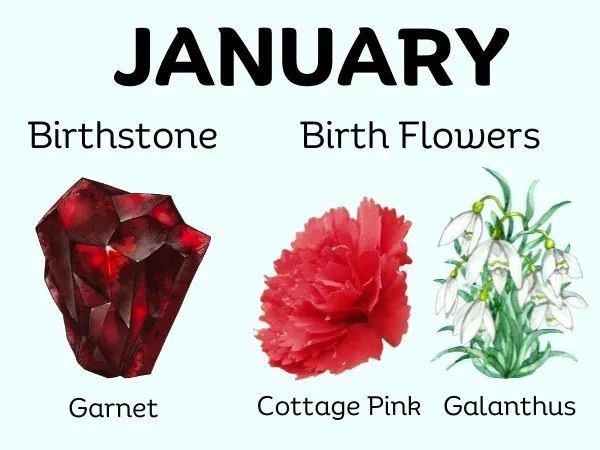
If you are born in January, you may feel a deceitful touch using nature. Everyone else seems to get bright summer flowers, roses sunflowers and lilies associated with the birthday. Meanwhile, January sits inside the bloodless, gray heart of snow while barely growing anything.
So what do you want your initial flower for apparently? A patch of snow? A bare part?
The solution is a little bit nicer than you might expect. January certainly has two favorite fertility plants, both of which convey very deep meanings associated with love, desire and new beginnings. They are the perfect symbols for the first real month of the year.
Here’s something most men will never understand. One of those flowers is well-known and easy to find, while the other is a quiet little flower pushing boldly through the snow, and its story could only be extra important than the two
I will introduce you to the starter plants each January, give an explanation of what each variety is, and show you the shade meanings you need to understand before giving one. You can also analyze fun ways to have a good birthday time in January with them. Let’s warm up for this snowy month.
Summary
By leaving this booklet with you, you will learn more about the plants in early January and their importance.
First, you will learn which K represents two plant life in January, and why it is the number one and secondary flower of the month.
You will then explore the carnation, the rich history, love, and understanding it symbolizes.
You can also find out what certain carnation colors mean, a color that you should almost certainly not give as a gift.
Next, meet Snowdrop, an oft-overlooked January flower, and learn the hopeful and touching story behind it.
You can see why each of these flowers so perfectly in the form of the primary month of the year, connecting with new beginnings and fresh starts.
Finally, you’ll find real, thoughtful ways to have January birthday fun using these flowers, from bouquets to decorations. Through breaks, absolutely everyone born in January will feel satisfied with their delivery ventures, and you know exactly to proportion them which means with the one you like.
You can also read about Violin Practice Tips.
What Is the January Birth Flower?
Let’s solve the basics first, see this traveling over many humans. January is no longer just a budding flower. It has two of them.
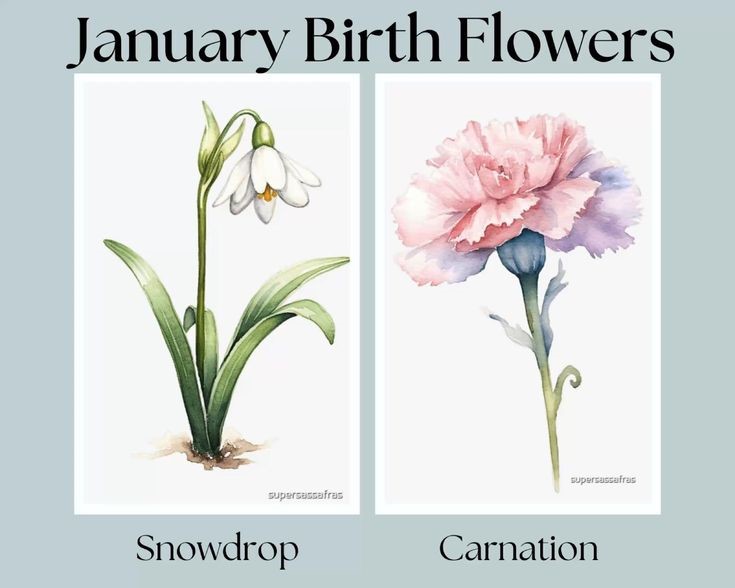
The primary flower in early January is the carnation, which counts with the help of its botanical name, Dianthus caryophyllus. This is the famous, widely known flower that most people associate with the moon. When a person mentions early flowering in January, that’s usually all they’re referring to.
The second flower in January is the snowdrop or Galanthus nivali. This smaller, more delicate flower is much less universally accepted but every bit as important. For many months, this variety is the number one and secondary bloom, providing you with options to choose from.
Why two? Nativity flower traditions grew out of centuries of singular cultures and customs, so often two flowers ended up linked in the same month. That’s perfect information for you. People born in January are given two beautiful plants, each with its own individual character and message. Let’s start with the obvious.
The Carnation: Love and Distinction
The carnation is the megastar of January and has been a treasure for thousands of years. The story dates back to ancient Greece and Rome, where it has already become a favorite.
It’s just the name suggests the situation. The plant name comes from a Greek word, which many interpret as “god flower”, being the name of such a valuable flower. So when you offer a carnation, you hand a person a flower that was once considered worthy of the divine. That’s a lovely concept to wear on a birthday.
In meaningful phrases, carnations often symbolize love, attraction, and difference. It is a flower that represents someone as unique and trendy. This obviously makes for a thoughtful birthday flower as it celebrates the person standing proud.
There are practical motivations this flourished in January as well. Carnations are hardy and bloom even in colder months, and they have a surprisingly long vase existence, staying fresh for a week or more. A discreet example, a bouquet of carnations given in early January can still provide a lovely look with help at the end of the month. But here you have to be careful, because the shadow changes everything a lot.
Carnation Colors and Their Meanings
These are the ingredients that can make or break your gift, and most people have no idea what makes it an issue. With carnations, the shade you choose sends a specific message. Pick the wrong one and you could say something you never imagined.
Start with safe, loving choices. Small red carnations are a typical compliment, while dark red means deep love and care. White carvings are characterized by pure love and good luck, which makes them stylish and heartwarming. Pink carnations carry a 特 smooth which means motherly love, which is why they are closely associated with Mother’s Day.
Now for the warning. Yellow carnations traditionally represent sadness or rejection. So while they picture cheerful and sunny, they are a color that you should almost never provide as a heartwarming birthday gift unless you realize that the person wholeheartedly loves the color yellow. It’s a traditional gift-giving mistake worth making.
Here’s my honest tip. A mixture of red, pink and white carnations is a beautiful, safe and meaningful favor for a birthday in January. It speaks love and admiration without any threat of a clumsy secret message. Match the color to your flirting, the flower speakeame for you. There is another January flower that arguably speaks louder.
The Snowdrop: January’s Overlooked Gem
Now permission meet the flower most people neglect, and virtually, its story will probably sweep you more than carnations. The snowflake is small, white, and quietly stunning.
His name says it all. The plant name Galanthus nivalis comes from a Greco-Latin root meaning something like “milky white flower of snow.” And that’s it. Snowdrop is one of the first real plants to bloom every 12 months, pushing its delicate white leaves heavily up through the frozen ground and snow despite everything else still being dormant .
Because of this brave little act, snow falls as a symbol of lust, rebirth, purity, and new beginnings. It seems like when the world feels coldest and darkest, and the spring light promises to be in its own way. Even in Christian folklore, it has become associated with the Virgin Mary and the Festival of Candles, where a layer of gentle spirituality is also important.
Here’s a fascinating bonus fact. Ice drops include a natural ingredient that is used to help treat memory-related conditions. So this little flower isn’t always just pretty, it’s obviously brilliant. My honest opinion? The snowdrop may be the larger fitting January flower of 2. A flower that brings wishes within freezing death symbolizes the perfect symbol of the beginning of a new year.
Why These Flowers Suit January
Step back for a second, and you’ll see how well-suited each plant is to its month. This is not a random pairing. It connects to that device in January.
January is best known for its gates and new beginnings after the historic Roman god Janus, whose face can be seen almost every time you look from side to side. The month is about new beginnings, reflection and stepping into something new. This theme almost flawlessly fits into Snowdrop’s message of wanting to be reborn. Flowers and months celebrate new beginnings.
Carnations also fit her personality. A flower that blooms and lasts long through the bloodless represents enduring strength and eternal love, qualities that feel important when humans set plans for a clean year and a reminder that warmth and love endure even in winter.
Two plants together make a lovely story. It offers hope and new beginnings, in terms of enduring love and difference. A couple of symbols can be uplifting for all people born in January to wear it must. And there are a plethora of fascinating ways to incorporate them into your lifestyle.
You can also read about Monster High Characters.
Ways to Celebrate a January Birthday
Knowing the meanings is incredible, but applying them is where the fun begins. Here are ways to consider celebrating a birthday in January with those flowers.
The most obvious choice is the glitter bouquet. A carnation arrangement in real colors makes a traditional, inexpensive, and long-lasting birthday gift. If you discover them, including some snowflakes or decide on a snowflake themed arrangement, it will also bring a hopeful second flower. Pair the group with a word that explains what it means, and it becomes a way more private.
Birth Plant Life also shines as a permanent reminder. Many humans love delivery floral decorations, such as pendants or charms with carnations or snowflakes, which make meaningful gifts that last much longer than reduce plant life These small, symbolic pieces experience the deeply non-public.
Initial flower tattoos for something permanent have only grown in popularity. A mascara or snowflake setup is what we January-born individuals usually carry with us, signifying their initial month. Looking ahead, these personal, whose meaningful things are developed in trust, as larger people choose capable with a real story behind them. Whatever you choose, it’s the concept behind the flower that really counts.
Conclusion
JAnuari seems a little much luckier than it first appears. Instead of barren winter months, it has two fantastic delivery facilities, each holding prosperous and hopeful media.
Put the main points into ideas. Carnations are the main flower of January and symbolize love and difference, which the color meanings depend on, so choose red, pink and white over yellow. The snowdrop is a secondary flower that represents wishes and new beginnings as it blooms boldly through the snow. Both start nicely with a healthy January cleansing spirit.
Above all, remember that this plant life goes beyond decoration. They convey messages of love, respect, hope, and rebirth, making them really meaningful gifts for all kinds of first-month babies.
Here you have a clean follow-up step. If the January birthday person, choose the kind of plants that have the meaning in mind, whether it is a bouquet of flowers, a piece of jewelry, or certainly a heartwarming piece of information that explains the symbolism. That small thoughtful gesture will mean much more than a universal gift.
So let me know which January flower speaks to you more, a lovely timeless carnation or a bold little snowflake growing through the snow?