


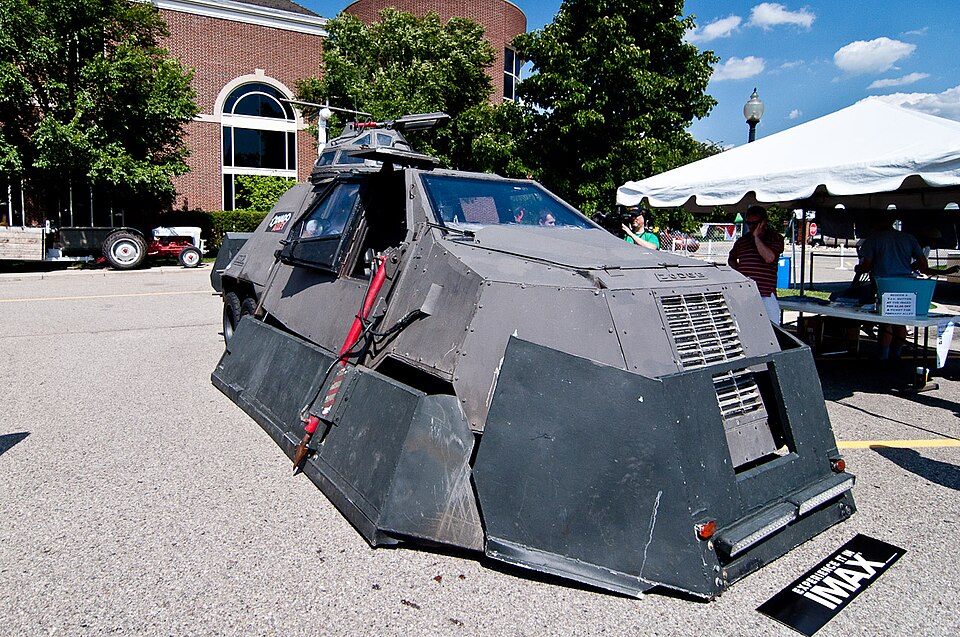
Imagine a large, armored truck driving down a dirt street when a violent curve is apparently already rolling. Instead of fleeing as if every sound instinct screamed, the drive directly ambitious it. Then the car drops the steel spike into the ground, howling, we should do a real twister bypass on it.
This is not a scene from a movie. There is an actual device known as the Tornado Intercept Vehicle, and it became built to do just that: remain present until an immediate hit from a twister.
Most humans first saw it on TV, roaring throughout Tornado Alley often indicating storm chasers. It seems like something out of a submit apocalyptic movie, an elemental tank, a component science lab on wheels. And that adds to a perceived question. Who builds a truck to power through the deadliest storms on earth, and why?
The latter involves an IMAX filmmaker, some clever engineering, and the sheer power of taking pictures that no person had ever seen. There is an equally general confusion about these cars, which travel on almost all of them.
I will explain what a Tornado Intercept Vehicle really is, how it is miles built to survive, if it really works, and how it differs from a familiar look-alike. Let’s chase this down.
Summary
By offering this guide you can understand the Tornado Interceptor Vehicle inside and out.
First, you can research what its miles are, who built it, and the unexpected purpose it is built within the first place.
Then you’ll find out how it’s designed to survive on Twister, from its heavy armor to the spikes that anchor it to the ground.
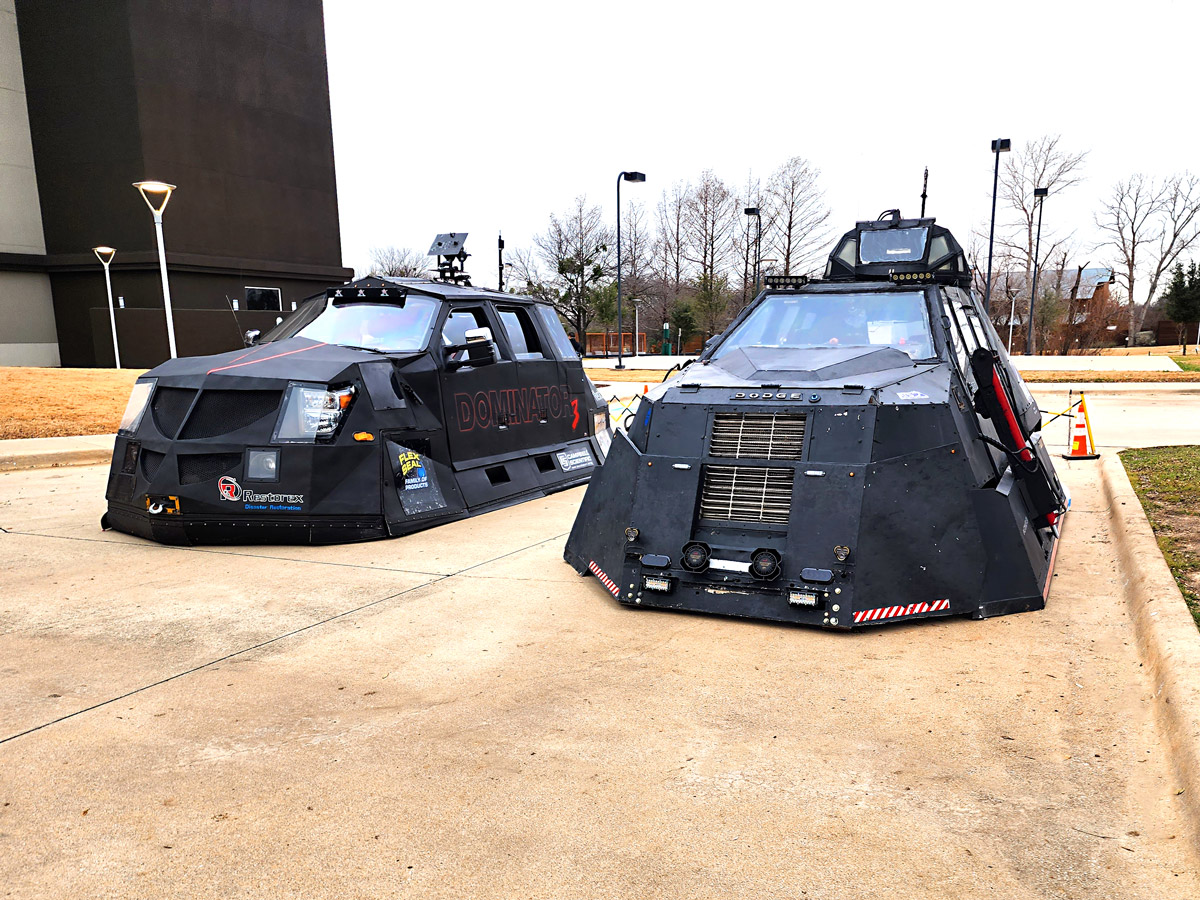
You can also fix a not uncommon confusion. The tornado interceptor vehicle and the famous Dominator are not the same element, and you will carefully analyze how they go together.
After that, you can find out if this device works, including a live real tiger and a dramatic air test.
You will discover whether it is a long certainly messy device, a filmmaking rig, or each.
Finally, you get an honest look at the very real risks behind those devices. Finally, you no longer see this armored beast as a stunt, but as a captivating combination of technical know-how, film, and daring engineering Let’s dive.
You can also read about Mashable Connections Hint Today.
What Is a Tornado Intercept Vehicle?
Let’s start with the basics, because the starting point story is more interesting than you might guess. The Tornado Intercept Vehicle, abbreviated to the standard TIV, is a heavily armored truck designed to apply pressure very close to, or even right after, the twister .
It is produced through IMAX filmmaker and storm chaser Sean Casey. His goal was no longer thrill-seeking and became his own personal pursuit. He wanted to capture an amazing, close-up of the indoor tornado for the giant screen IMAX movie. To attempt this, he needed a vehicle that could drive him into the storm and keep him alive.
So he built one. Work on the primary TIV began in 2002 and took approximately 8 months. Casey later built a 2d, improved model, and each machine became well known in his movies and TV shows.
Soon, TIV is where filmmaking ambition met extreme engineering. It’s a tough enough digital camera platform to face nature in its most violent forms. That durability is no accident, so permit’s keep an eye on how it’s built.
How It’s Built to Survive a Tornado
Surviving a tornado requires extreme engineering, and the TIV is full of clever features. Every part of it is designed to withstand wind, debris, and the raw energy of the storm.
The Fremen will begin. T.I.V. There are mass issues because a heavy, low vehicle is much harder to lift in the air or float. The windows are not plain glass either. They’re thick, bullet-resistant polycarbonate sheets designed to shrug off flying debris as they spin at deadly speeds.
When he stops the storm to sit down, high imagination skills come into play. The TIV can use the suspension to lower it closer to the floor, reducing the space for air to travel downwards. Additionally, an anchoring device uses hydraulic spikes or nails forced into the ground and pins the car around against the pull of the cord Some versions add skirts that drop to the ground to deflect wind and onto the truck.
Above sits a rotating tower, initially designed to hold a heavy IMAX camera and film in either direction. As a perfect example, when the TIV is anchored and sealed, the team can film a tornado moving up while staying inside exceptionally blanketed. It is a rolling castle with a digital camera. But it’s not the easiest armored storm truck to find, which causes a lot of confusion.
TIV vs the Dominator: Not the Same Vehicle
The mix here fools almost any body, and keeping it clean will make you sound like an expert. The tornado interceptor vehicle and the Dominator are two important machines created through extraordinary people.
TIV, as explained, is the arrival of Sean Casey, designed specifically to film IMAX footage of indoor tornadoes. It’s priority is shooting film, so it’s miles and miles big, heavy and built around the digital camera tower. It is the larger and more tank-like of the two.
The Dominator is a unique vehicle built and operated by meteorologist Reid Timmer and his team. While armored and designed to withstand tornadoes, its awareness leans more towards gathering scientific facts and approaching storms the Dominator series, like later variations like the Dominator Three, tends to have a lower, slimmer profile compared to the boxy TIV.
So why do humans mix them up? Because each appeared on the same storm-chasing TV shows, both are armored, and each force is close to the tornado. But they are adversaries of sorts, created using specific groups with specific priorities and desires. One reminds them of Casey’s filmmaking system and, on the other hand, Timmer’s statistical machine immediately takes care of them. Now, are these what they advertise themselves to be?
Does It Actually Work?
Skepticism is real. Driving in a tornado feels like a stunt doomed to failure. So did TIV investigate itself? The honest answer is yes, there are a few bumps in the road.
TIV has managed to intercept a real tornado. One of its most famous moments came in 2009 near La Grange, Wyoming, when the second TIV set up and turned into an actual twister disaster that Casey spent years tracking and photographing for his movie, which is now no longer a staged scene.
The durability was also put to a dramatic test in the popular fable-spoiler TV show. The TIV parked behind a jet engine blasting the same gas as a top-tier tornado, about 250 miles per hour. It held up with a very effective small loss of anchor prong, an outstanding end result that showed engineering becoming a reality.
That said, let’s live honestly. These machines were no longer ideal. The vehicles suffered mechanical failures, with damaged axles, and their production turned into an elaborate, high-value process Individual TIVs are now said to sit retired on a farm. So TIV worked, and worked remarkably hard, but he turned into a disturbing, imperfect beast. Which raises a deeper question about its real purpose.
Science, Film, or Both?
People often argue that T.I.V. Is it a serious medical device, or a complicated movie prop? The fact sits nicely somewhere in the middle.
On the technical knowledge side, TIVs carried actual units to measure wind speed, stress, and various atmospheric data at an intercept location Getting the units near the center of a tornado is actually a treasure, because that information is noticeably harder to store. So it supported a meaningful measurement that everyday engines should not be corrected at all.
On the film side, the authentic driving purpose also became cinematic. Casey built it to capture IMAX footage for his Twister movie, and it became a TV star in the storm chasing museum, reaching hundreds of thousands of visitors and its dramatic looks and daring missions making it a pop culture icon.
Here is my honest opinion. TIV’s greatest legacy is not always medical records, as unique as this one. That’s how the car captured the public’s imagination and sparked endless human interest in tigers and excessive weather technology. Blurring the line between technology and theater has now become a non-vulnerable situation. All the goal to be, and worked brilliantly hard. But none of this should hide the deep truth.
The Danger Behind the Machine
It’s easy to look at this armored truck and think twister chases look exciting or safe. That impression is dangerously wrong, so let’s keep our eyes clear about it.
Most of the most violent and unpredictable forces of nature are tornadoes. They can change lanes without being careless, throw off a large piece of debris, and grade the entire section in their path. Even a purpose-built, armored vehicle piloted by an expert faces the possibility of full-scale range. The people behind TIV were experienced experts who spent years preparing, yet they had gaps and close calls
This is important because storm chasing has become popular, and crowded roads filled with novice chasers can create real hazards in a range of dangerous weather and normal vehicles can be TIV.
So treat those tools for what they are: special tools for trained experts, not invitations to track storms on their own. If severe weather is a threat, the safest place is a strong safe place, not a road. Looking ahead, imagine more drones and wide-ranging sensors taking the riskiest close-ups, allowing humans to gather rotations and images without putting themselves in the path of the storm That change could turn a bold, manned intercepted vehicle into an incredible chapter rather than fate.
You can also read about Top 10 Buiness Intelligence Exercises.
Conclusion
The tornado interception vehicle is much more than a tank that drives through storms. It’s a bold mix of imagination, clever engineering, and genuine medical interest.
Note the important object factors. TIV was created through filmmaker Sean Casey to shoot IMAX footage of internal storms. It survives on heavy armor, thick polycarbonate windows and ground anchor spikes. This is unusual equipment for Reid Timmer’s Dominator, and has virtually prevented real tornadoes despite surviving severe wind tests.
Above all, keep in mind stability on the surface. TIV is a combination of technical knowledge, elementary theater, and images of trained experts dealing with a very real possibility. Its honest triumph turned into a public fascination with the power of tornadoes.
Here you have a clean next step. If this machine has caught your interest, take a look at some real block photos it has taken, and then find out how tigers are shaped in general. You’ll benefit from a whole new appreciation for each of the storms and the plucky machine they’re built to face.
So tell me, does the Tornado Intercept Vehicle amaze you extra as a piece of fearless engineering, or as a digicam rig that added the interior of a tornado to the big display?